

Consumer prices rose 5.54% in September, faster than economists expected, as food inflation jumped. The numbers make a second rate increase in December more likely and put pressure on household budgets ahead of the festive season.
India’s inflation problem got worse in September, and faster than forecasters had expected.
Retail inflation rose to 5.54% from a year earlier, up from 4.83% in August, data from the Ministry of Statistics and Programme Implementation showed on Monday. It
was the highest reading in 23 months and above the 5.4% economists had expected. Inflation has now been above the Reserve Bank of India’s 4% target for four straight months and has risen every month since April.
Food up
Food drove most of the increase. The consumer food price index rose 7.74% in September, up from 5.97% in August. Onion prices more than doubled from a year earlier, rising about 108%, a familiar warning sign in a country where onion prices often shape public views of the cost of living.
The burden falls hardest on rural households. Rural inflation reached 6.08%, up from 5.24%, crossing the top of the RBI’s tolerance band. Urban inflation rose to 4.88% from 4.31%. Rural families spend a larger share of their income on food, so price increases hit them sooner and harder.
The RBI’s dilemma
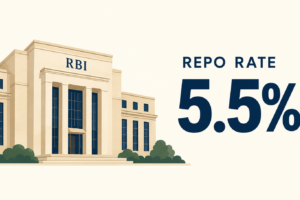
The data arrives a week after the RBI raised its benchmark repo rate by 25 basis points to 5.50%, its first increase since February 2023. The central bank also shifted its stance to calibrated tightening, which means rate cuts are off the table for now.
September’s reading supports that decision. The RBI had projected inflation of 4.9% for the July-to-September quarter and about 6% for October-to-December.
With September already above 5.5%, the path toward 6% looks more certain. Nomura and SBI Research had both forecast another increase in December even before this data. The latest numbers make that outcome harder for the central bank to avoid.
The difficulty is that interest rates are a blunt tool against food inflation. Higher rates can cool demand for loans, cars and housing, but they do little to bring down vegetable prices driven by weather, supply disruptions and transport costs.
What rates can do is stop high food prices from spreading into wages and the prices of other goods. Preventing that spillover is the RBI’s main concern now.
Increasing pressures
Two outside forces make the job harder. Oil prices remain high because of conflict in West Asia, and India imports most of its crude. A weak rupee, which touched a record low of 96.96 per dollar in May, raises the cost of every imported barrel. Both feed into transport and manufacturing costs, adding to price pressures beyond food.
What it means
For India Inc, the immediate concern is demand. Consumer companies had hoped for a strong festive season after a period of uneven spending. High food inflation leaves households, especially rural ones, with less to spend on other goods. Companies selling everyday products in villages and small towns are most exposed.
For borrowers, the message is that loan rates are unlikely to fall soon. Loans linked to the repo rate have already started to reprice after the October increase, and another hike in December would add to monthly payments.
The next inflation data is due on 12 November, before the RBI’s December meeting. Unless food prices ease sharply, the central bank is likely to raise rates again.
About The Author