Indians spent an estimated ₹1.25 lakh crore on Dhanteras, a record, according to traders. The money went into several product categories showing that at the ground level economy is cheering up
Dhanteras has always been about buying something new for the home. This year, Indians bought a lot of it.
The festival generated an estimated ₹1.25 lakh crore of business across India, a record, according to the Confederation of All India Traders (CAIT). That was well above the traders’ body’s own forecast, made the same morning, of a little over ₹1 lakh crore. CAIT reported heavy footfall across jewellery markets, car showrooms, electronics stores and neighbourhood shops.
Even while these are early estimates, the early data shows that from bullion dealers and carmakers to delivery apps, there has been: a strong festival, and in some categories, a surprisingly strong one
Gold and silver: more than half the bill
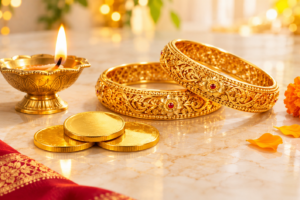
Precious metals made up the largest share. Gold and silver sales crossed ₹66,000 crore, about 53% of the day’s total trade, according to the All India Jewellers and Goldsmith Federation. Delhi’s bullion market alone accounted for more than ₹10,000 crore.
Gold sales rose an estimated 15–20% from last year to about ₹60,000 crore, according to industry estimates. That growth outpaced the price of gold. In Delhi, 24-carat gold cost about ₹1.46 lakh per 10 grams on Dhanteras, roughly 10–11% more than a year earlier, which suggests households bought a little more gold by weight, not less.
The reason is the gap from this year’s peak. Gold hit a record of about ₹1.83 lakh per 10 grams on 29 January and has since fallen about 20%. For many families, that felt like a buying opportunity.
What they bought was lighter. Demand shifted towards 14-carat and 18-carat jewellery, small coins and silver, which was expected to see sales rise about 30% [Single source: NewsBytes]. Among listed retailers, Senco Gold said sales value rose more than 25%.
On the road: deliveries by the thousand
Showrooms were the second big draw. Maruti Suzuki expected to deliver about 30,000 vehicles on Dhanteras day. Tata Motors’ passenger vehicle business expected more than 12,000 deliveries in a single day, and Hyundai about 16,000 across Dhanteras and Diwali, about 14% more than last year. Mahindra was struggling with tight stocks of its popular SUVs.
Maruti’s number needs context: last year it delivered about 50,000 vehicles over Dhanteras, but that was spread across two days because of the way the festival fell on the calendar.
Smaller cities showed the scale. In Indore, traders estimated total Dhanteras business at more than ₹1,000 crore, with about 10,000 two-wheelers and 2,000 cars delivered, as per reports. Traders in Chhattisgarh put statewide business at about ₹12,000 crore, with more than 1.5 lakh vehicles sold, including tractors and commercial vehicles. Many buyers had booked during Navratri and timed delivery for Dhanteras.
The 10-minute gold coin
The fastest-growing channel this year was the phone.
Quick-commerce apps, which deliver within minutes from neighbourhood warehouses, turned Dhanteras into one of their biggest days. Zepto said it delivered more than 14,000 gold and silver coins an hour at peak, about 298 a minute. Swiggy Instamart said gold coin orders rose 23-fold in the week before the festival, and silver coin orders sevenfold. Instamart tied up with Kalyan Jewellers to offer free silver with gold coin purchases.
The apps also sold the everyday items of the festival in huge volumes. On Zepto, sales of brooms, traditionally bought on Dhanteras, rose nearly 39 times compared with a normal day, steel utensils 20 times and decorative lights 18 times.
What the numbers mean
The strength of Dhanteras supports a picture that has been building through results season: consumer demand in India is holding up well. Carmakers reported record October sales, consumer goods companies such as Britannia and Marico posted strong volume growth, and jewellers grew 20–30%.
CAIT expects total festive trade from Navratri to Diwali to exceed ₹7 lakh crore, up 15–18% from about ₹6.05 lakh crore last year.
Two cautions apply. First, these are estimates, and rupee figures are inflated by higher prices, especially for gold and silver. Second, festival spending is concentrated: a strong Dhanteras says more about households’ willingness to spend on special occasions than about everyday demand.
The real test will come in the December-quarter results. With Navratri, Dhanteras and Diwali all falling in that quarter this year, companies from jewellers to carmakers to quick-commerce platforms will show investors whether the festive rush translated into lasting growth.
About The Author