


Gold fell below $3,800 an ounce for the first time in 14 months as the dollar strengthened and a US rate hike looked almost certain. Jewellery stocks and gold-loan companies fell with it, and Titan was the Nifty’s worst performer.
Cheaper gold sounds like good news for jewellers. On Wednesday, investors treated it as bad news.
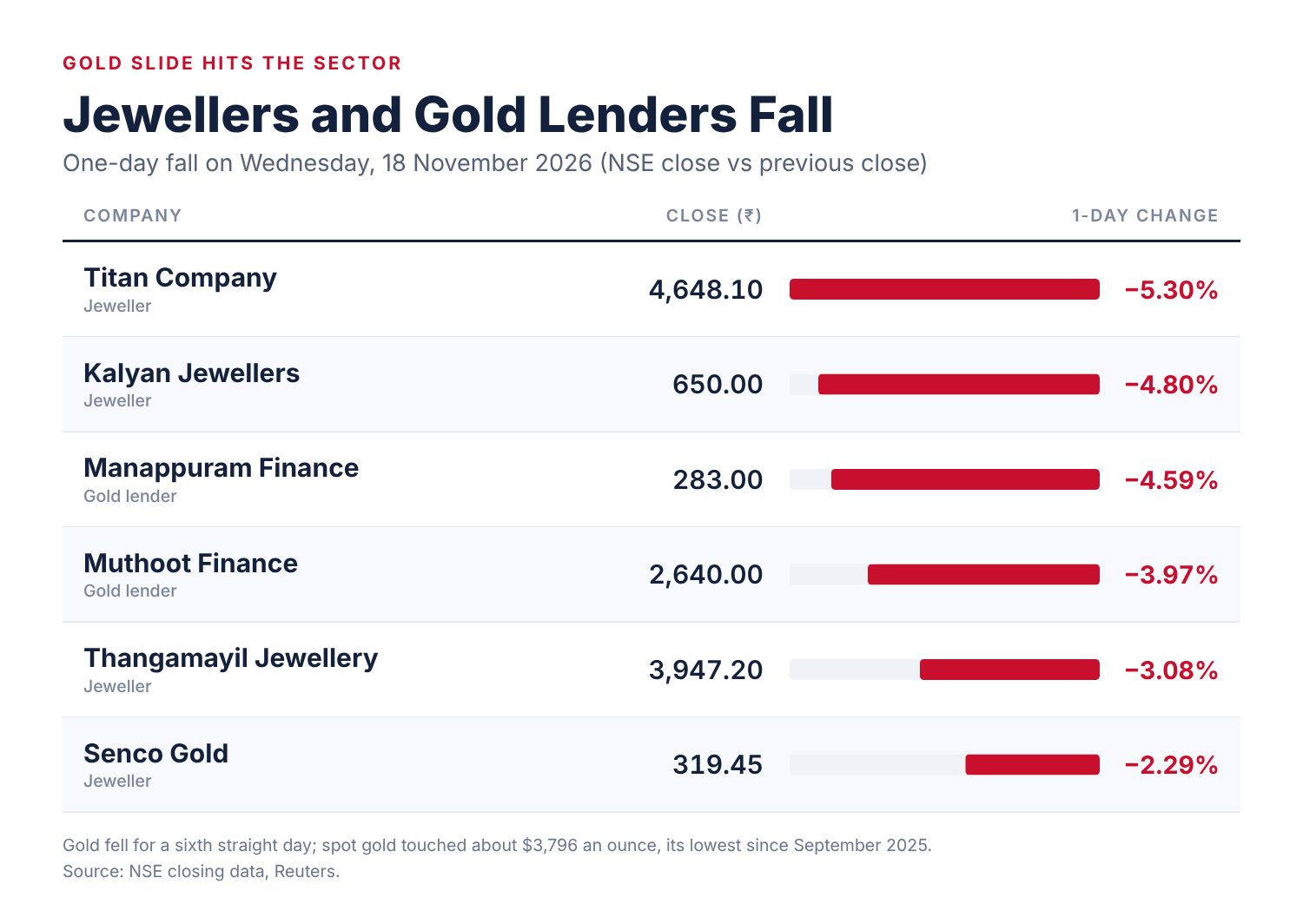
Titan closed 5.3% lower at ₹4,648.10, the Nifty’s biggest loser. Kalyan Jewellers fell 4.8% to ₹650, Thangamayil 3.08% and Senco Gold 2.29%. Sky Gold and Diamonds fell as much as 5.63% during the day.
Gold-loan companies were hit too: Manappuram Finance fell 4.59% and Muthoot Finance 3.97%. The Nifty Consumer Durables index lost 3.13%, the worst sector of the day.
The fall in gold explains most of it. Spot gold dropped 1.4% to $3,796.37 an ounce in Asian trade, its lowest since September 2025, according to Reuters. In India, 24-carat gold in Mumbai fell ₹2,780 to ₹1,33,260 per 10 grams by midday.
That was its sixth straight daily fall, and it is now 8.74% below the 5 November level. MCX December gold futures fell more than 2% to about ₹1,31,300, about 27.5% below January’s record of ₹1,80,779. Silver dropped about 3% and is now 61% below its peak.
With the dollar near a 19-month high, it makes gold more expensive for buyers outside the US. CME FedWatch puts the probability of a quarter-point Fed rate hike in December at about 96%, and New York Fed President John Williams said another increase will probably be needed.
With US 10-year yields above 5%, holding gold, which pays no interest, has become costly. Brokerages said investors are treating gold as something to sell for cash, not a safe asset to hold during market volatility.
But why jewellers are hurting
For jewellers, the first problem is inventory. Retailers hold a lot of gold in their showrooms and warehouses, often several months of sales. When gold rises, that stock gains value, and part of the gain shows up in margins.
When gold falls quickly, the reverse happens. Jewellers that do not fully hedge see the value of their stock drop. Over the past year, rising gold prices helped profits. That support has now gone.
The second problem is timing. When prices fall day after day, many buyers wait for them to fall further. That is a concern in late November, at the start of the wedding season, when jewellers expect some of their biggest sales.
Gold-loan companies face a different problem. Muthoot and Manappuram lend against jewellery pledged by customers. A lower gold price reduces the value of that collateral, so customers can borrow less, and lenders have less protection if borrowers default.
Rising gold prices had driven strong loan growth in this sector. Falling prices reverse that.
Valuation and earlier gains added to the selling. Kalyan rose more than 20% over three sessions last week, so some of Wednesday’s fall was profit-taking. Titan’s valuation is well above the sector average, so it has less room for disappointment.
The government is also a risk: the effective import duty on gold was raised to 15% in May, and earlier calls to limit gold buying led to sharp falls in these stocks.
What lower gold could mean
Falling gold could still help the sector over time. During Dhanteras, most of the jewellers’ recent growth came from higher gold prices, not from selling more gold. Senco’s festive figures showed same-store sales growth of 17%, matching the rise in gold prices.
If gold settles at a lower level, buyers who held back during the peak may return in the wedding season, and jewellers would sell more gold by weight. That is healthier growth than relying on prices.
Gold has to stop falling first. Fed minutes due tonight, and the December rate decision, will decide whether the decline continues or levels off. Until then, investors will focus on inventory losses and delayed purchases.
About The Author