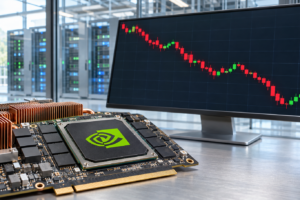
Jensen Huang has resigned as Nvidia’s chief executive and left its board, ending 33 years at the top of the company that powers the AI boom. Chief financial officer Colette Kress takes over on an interim basis. The shares plunged as much as 14% before recovering to close down 4.3%.
The week that began with a confession has ended with a departure.
Nvidia’s board announced on Thursday that Jensen Huang has resigned as president, chief executive officer and a member of the board, effective immediately. Colette Kress, Nvidia’s executive vice president and chief financial officer, has been appointed interim chief executive, and will keep her role as CFO while the board searches for a permanent successor.
The board also named Harvey Jones, a former chief executive of chip-design software company Synopsys and a long-serving Nvidia director, as its first-ever chair. Until now, the board had no chair, which critics had pointed to as a governance gap.
Nvidia’s announcement did not give a reason for Huang’s departure, or say whether he would keep any role with the company. In a statement, Kress said she was committed to building on the foundation Huang had created over 33 years, and that the company’s focus remained on customers, partners, developers and shareholders. The board acknowledged Huang’s contributions to the company.
How the week unfolded
The resignation caps five extraordinary days. On Sunday, Huang admitted in a memo to staff that he had been unfaithful to his wife. The woman involved is a Chinese businesswoman whom US intelligence officials suspect of spying for Beijing. The board opened an independent investigation and said it still had confidence in him.
On Wednesday, the New York Times reported a second extramarital relationship, with a senior Nvidia executive who reported directly to Huang. The Wall Street Journal then reported that the board was preparing to oust him, and directors met late that night.
China has denied the spying allegations, and US officials have not made public any evidence for the claims. The board’s investigation, led by former federal prosecutor Joon Kim, remains under way. The company also faces scrutiny in Congress and a shareholder class-action lawsuit.
The market’s verdict
Investors reacted sharply, then steadied. Nvidia shares fell as much as 14% at the open, to $148.80, a 52-week low. Then retail buyers rushed in, and the stock pared its losses to close down 4.34% at $166.19, leaving the company worth about $4 trillion. Trading was extraordinary: Nvidia recorded its highest dollar volume of shares ever traded.
Even after the recovery, the damage is large. Thursday’s close was about 11% below where the stock stood last Friday, before the scandal broke, and about 31% below its record close of $239.24 on 6 October (our calculations).
The fallout spread through the AI trade. AI cloud companies that depend on Nvidia’s chips fell sharply, while rivals AMD and Broadcom each rose about 6%, as some investors bet customers may spread their chip purchases more widely.
Why it matters for India
Indian investors who hold Nvidia through international mutual funds, Nasdaq-100 index funds or overseas brokerage accounts are taking a direct hit. More broadly, uncertainty at the world’s most important AI company could keep global investors wary of AI stocks, a trend that has helped drive foreign money into Indian shares this month.
What comes next
Huang’s troubles aren’t over. He has agreed to testify before Congress, according to CNBC, and the Senate’s Republican leader, John Thune, said he expects congressional oversight to continue. Nvidia and Huang also face a shareholder lawsuit alleging investors were misled. President Donald Trump called the saga sad, and suggested that former Apple chief executive Tim Cook should take over at Nvidia.
About The Author