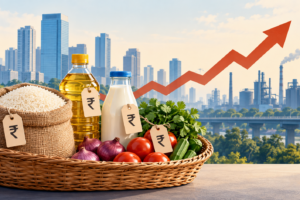
India buys three times as much from China as it sells there, and the gap is growing fast. New Delhi’s chosen response, patient negotiation rather than retaliation, is not closing it.
The numbers came from Beijing, not New Delhi. Chinese customs data for January to September showed India’s trade deficit with China at $105.93 billion, up 20.7% from a year earlier. Total two-way trade rose 25.4% to $144.45 billion.
Put simply, of every $100 traded between the two countries, India sends about $19 to China and receives about $81 back.
Two days after that data came out, Finance Minister Nirmala Sitharaman named the problem directly. Speaking to the Atlantic Council on the sidelines of the IMF-World Bank meetings in Bangkok, she said the real obstacle is non-tariff barriers, not tariffs.
Non-tarriff barrier
Moreover, tariffs are visible. They are a published tax at the border. Non-tariff barriers are harder to spot and harder to challenge. They include product registrations that take years, plant and animal health checks that keep finding problems, testing rules that change, and approvals that never quite arrive.
Sitharaman said China uses these freely, often citing phytosanitary rules, the plant and animal health regulations that apply to food and farm goods. She said India keeps raising the issues, investigations happen and both sides talk, but nothing changes.
She pointed to three products where India should be competitive in China: generic medicines, beef and vegetables. India is one of the world’s largest suppliers of generic drugs, yet its exports to China remain small.
The road India has not taken
The most revealing part of her remarks was about what India is not doing. She said India has deliberately avoided answering with its own non-tariff barriers or countervailing duties, the extra tariffs a country can impose to offset unfair subsidies. She described the process of negotiation as sometimes tiresome, but said India sticks with it.
That restraint has costs and reasons. India depends on China for electronics components, solar equipment, active pharmaceutical ingredients and machinery. Many of its factories, including those set up under production-linked incentive schemes, need Chinese inputs to work. Hitting Chinese imports hard would also raise costs for Indian manufacturers.
China’s response was quick and polite. Beijing said it was ready to work with India to address each side’s economic and trade concerns. The wording was diplomatic, and it reframed the deficit as something both sides need to address.
The cost of patience
Sitharaman widened the complaint to Southeast Asia, calling India’s trade agreements with ASEAN countries very skewed against India. This has long been a concern in New Delhi. Duty-free access under those agreements has helped ASEAN exporters more than Indian ones, and some Chinese goods are believed to reach India through ASEAN routes.
That context matters for India’s other trade talks. India is negotiating with the United States, has a deal with the UK and is building ties with the European Union. Its experience with ASEAN is a reminder that a free trade agreement is only as useful as the market access it actually delivers.
The deficit is now large enough to affect the wider economy. A $100 billion-plus gap with one country adds to demand for dollars and to pressure on the rupee in a year when oil is already expensive and foreign investors are selling.
For now, India is betting that slow diplomacy will eventually open Chinese markets. Beijing’s quick reply suggests it is happy to keep talking. Talks alone, though, have not changed the figure in the customs data, and it is still rising.
About The Author