

India’s four largest carmakers all reported record monthly sales in October, as Navratri, Dussehra and pre-Diwali bookings converted into deliveries. Demand is not the industry’s problem; profit margins are, as this week’s results showed. Electric vehicle sales are rising quickly as fuel prices climb.
October was a record month for Indian carmakers.
Maruti Suzuki reported its highest-ever monthly sales. Total dispatches rose 25% to 2.76 lakh units, and domestic passenger vehicle dispatches rose more than 20% to 2.12 lakh.
Tata Motors Passenger Vehicles sold a record 75,426 vehicles, up 23% from 61,295 a year earlier, its first month above 75,000. Domestic sales rose 21% to 73,894.
Mahindra & Mahindra reported its highest-ever domestic SUV sales of 73,338 units. Total sales, including tractors and commercial vehicles, rose 9% to 1,31,109. Exports rose 77%, and three-wheeler sales rose 38% to 17,632.
Hyundai Motor India reported its highest-ever monthly sales, combining domestic and exports.
Elsewhere, Tata Motors’ commercial vehicle sales rose 27% to 47,652, and JSW MG Motor sold 8,013 vehicles, up 19%.
Why October was so strong
Timing explains part of it. This year Navratri and Dussehra fell in October, and many buyers took delivery before Diwali on 8 November. Dealers also built up stock ahead of the main festive weeks.
But the strength goes beyond timing. Maruti said last week it had about 2 lakh orders still waiting to be filled at the end of September, and dealer inventory was only about 17 days. Buyers want cars and are prepared to wait for them.
The fuel effect
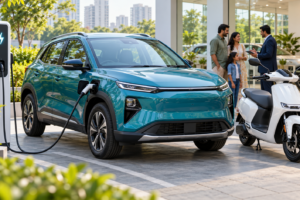
Rising fuel costs are showing up in what buyers choose. Tata Motors sold 16,244 electric vehicles in October, up 75%, about 21.5% of its total sales. More than one in five Tata cars sold was electric. Maruti has also said CNG cars are in strong demand.
With petrol above ₹110 a litre in many cities, the higher upfront price of an EV is paid back faster through fuel savings. The oil shock is speeding up a change in vehicle mix that might otherwise have taken years.
Demand is strong
October’s sales came days after carmakers reported squeezed profits. Maruti’s September-quarter profit fell 27% because raw material costs rose 48%. Hyundai’s fell 24%. Both sold more cars and earned less on each one.
Record October volumes will help, because higher production spreads fixed costs over more units. But they will not solve the margin problem alone. Carmakers need commodity prices to stabilise or need to raise prices further, which could test demand.
What next?
November is the next test. Diwali falls on 8 November, so much of the peak buying happens in the first week. Retail registration data, which measures actual sales to customers rather than shipments to dealers, will show whether October’s dispatches turned into real sales or are sitting in dealer stock.
For now, the October figures show that Indian car buyers are still buying, even with high fuel prices, rising interest rates and inflation.
About The Author